

I just dug up this post from my archives (I still can’t believe I’ve been blogging for over eight years now) because for the past few days I keep circling back to this message; I’ve been hearing it everywhere. Perhaps it’s topical, presenting itself to me as a reminder to apply these learnings to my marriage. And perhaps I’m meant to share this again with you because you need to hear it.
Watching Oprah’s Life Class the other day, I heard the “Fake It To Make It” message once again. Keisha, a woman who chose to adopt her incarcerated brother’s little boy expressed her deep resentment toward her nephew, a hearing impaired child with Diabetes. He was hungry for her affections, and she confessed that she was at war with herself because while she didn’t want to damage this sweet boy, she also was deeply resentful, hating having to sacrifice, and didn’t want to hug him or give him the affection he so often craved. She wanted to find love elsewhere, wanted to pursue her degree in medicine, and he got in the way of her plans. Brave woman to admit to that truth. Intellectually, of course she realized he didn’t deserve any of this, that he deserved only love, but she couldn’t get past her feelings of “This isn’t fair! I never would’ve signed up for this had I known.” At one point, Oprah addressed the audience to remind viewers to look within their own lives, not at Keisha’s, and figure out where they are ignoring the love that’s right in front of them for the taking. Keisha was looking for someone to love, to start a real life, oblivious to the fact that this boy was that someone she could love. Yes, she wanted romantic love, a partner, but it was coming at her in a different form. The little boy, Oprah said, was there to help her open up some heart space. Bishop T.D. Jakes’s advice to Keisha was to fake it, that the feelings would come. Fake it to make it. I felt myself nodding.
Belief follows behavior. Sometimes you have to force yourself to invest in the choices you’ve made and to make the most of your situation. It can’t hurt to at least try. It was the message I needed to hear this week. Fake it to make it in every aspect of your life. Your job, your love life, even your health…
I took a Health Psychology class in college, where I learned, among other things, about the power of positive (and craptastic) thinking, particularly its impact on our health. I already knew that imagining myself making contact with the ball on a softball field would improve my chances of slamming the thing for real. That we can literally practice in our mind, visualizing it happening, and studies have proven that it works.
I also knew, as a writer, that I could elicit a physical response from words alone.
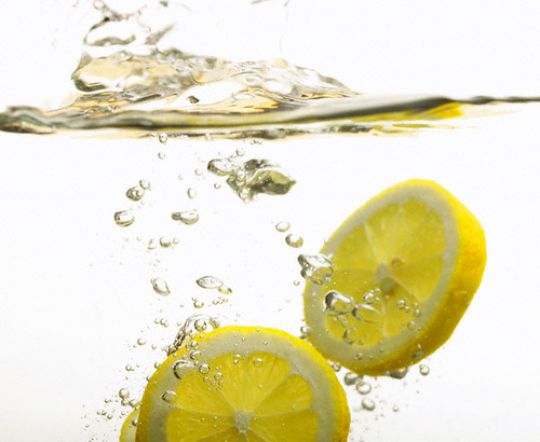
With just a paragraph of description, with nothing but imagery and words, we can cause a physical reaction. Simply describing, for example, the texture of a lemon, its pores, and slightly green tip. The resistance of a knife as it cleaves through the skin, cleanly. The sound of the knife pushing forward on the wooden board. The way the halves rock and teeter, laid out on their sides. How some of the seeds are left whole, small winks hiding beneath the translucent pockets of sour. Wiping the knife blade clean of the acrid juices, and that first squirt, clean and bright, a spray. Then pulling a wedge to my lips, taking that quick first lick, just to test, and the wince that comes after that first sharp taste, a sting and burn, and a bloom of saliva from the back of your jaws.
 I could salivate just from reading it, a physical response to imagery. Then I studied the Placebo Effect, “the power of healing that can stem simply from a patient’s belief that a treatment will be effective.” Basically in a randomized and double-blind study, patients were divided into two groups: one received actual medication, and the other group was given a look-alike placebo pill. The study was double-blind, meaning not just the patients, but the doctors too had no idea which was which. And all the patients believed the pill would help them… and it did. Just the belief that it was working improved the patients’ health. This could be the reason so many people believe in the effectiveness of alternative medicines. In fact, “Ten years and $2.5 billion in research have found no cures from alternative medicine. Yet these mostly unproven treatments are now mainstream and used by more than a third of all Americans.”
The Placebo Effect has always fascinated me, not so much with regard to our health, or the validity of acupuncture or chiropractic treatments, but with how this concept of “belief following behavior” could be applied to my dating life.
The practice of forcing myself to date the men who were actually interested in me—the over-eager boring ones who never made me work for it, the ones who’d make great fathers, and put me first—was a test-study of the “belief follows behavior” axiom. If I forced myself to date celery instead of funnel cake (behavior), I’d soon actually believe that I prefer these celeriac men (belief). The same way that forcing yourself to smile even if you’re miserable (behavior), actually DOES make you feel better (belief). “If I’m smiling, I must be happy.” Then we actually feel happier. So if I forced myself to continue to date a man to whom I had no attraction (behavior), the assumption is that I’d grow to be attracted to him (belief). That’s why we hear so many stories of, “Well, I wasn’t attracted at first, but then the more I got to know him, the more I liked him.”
It extends beyond our dating lives, touching almost everything. Believe you’re already a thin person, you start to eat and behave like a thin person. Insert cough here. No need to worry; there’s a placebo for that.
A YEAR AGO: Food and Mood Dreams, Obsession Under Pressure
2 YEARS AGO: Not A Euphemism
4 YEARS AGO: Back in LA

Thank you for writing this. Your words help.
I need a placebo to help me feel better for dumping my college boyfriend of 4 years. He was boring.
You should talk more about this at your Thanksgiving special! Isn’t it possible if I think I’m thin it might work? Please?
I have read a lot about placebos and it is fascinating. Makes me really wonder about medicine and what we know/don’t know.
Is there any study done which shows which ailments are best served by placebo?
Is there a difference between placebo and positive thinking? I think there is. Placebo is a belief something works. Positive thinking allows for broader benefits.
This so interesting and really made me think! Hmm…how to create placebos for oneself…
One silly little typo: it’s elicit, not illicit.
I won’t address the placebo effect because I don’t know enough to have an opinion. I will address only you first paragraph about power to make stuff happen, etc. If you haven’t already done so, read Brightsided by Barbara Ehrenreich.
Disclaimer – I worship Barbara Ehrenreich and not because we’re both Barbara E’s. I think she is brilliant and one of the great thinkers of the modern era. On Rosh Hashanah, guess who I’m really thinking about when I pray… OK, maybe not, I’m probably thinking about the challah roosting just out of sight, but she is my touchstone for so many of my opinions.
The power of the mind is incredible. I wonder how much research is going into that?
Thank you for this. I’ve made it my email forward of the day for my girls.
The word “acrid,” in my opinion should have been acidic.
I can think myself hungry. While eating.
I can also, however, think my ass round, happily juicy and bounce-a-quarter-off worthy while on the incline trainer.
Thank you for sharing. A very enlightening post. Much needed.
PLACEBO: THE BELIEF EFFECT by Dylan Evans was a pop-culture take on the medical effects. Decent read. I think it is titled PLACEBO: MIND OVER MATTER IN MODERN MEDICINE in the US edition. I’d recommend it.
It is my own take on the medicine that the placebo effect is most significant on immunological conditions (those which have very obvious links to stress hormones, etc.). But many, many pathologies (heart conditions and trauma, for example) illicit immunological disturbances/signal immunological pathways, so I guess the answer is that the placebo effect reaches far and wide.